
“History has failed us, but no matter.”
How many times have the dazzling stories of kings and queens, heroes and warriors, rebels and pirates taken center stage in literature? But what about immigrants, those living in a nation that seems hell-bent on persecuting, trampling on, and ultimately erasing? Writing about common people, Min Jin Lee utters a powerful truth:
“…what we also witness each day is how many ordinary people resist the indignities of life and history with grace and conviction … We cannot help but be interested in the stories of people that history pushes aside so thoughtlessly.”
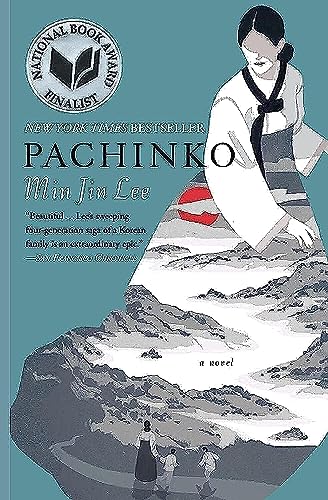
#BookReview: Pachinko by Min Jin Lee
A spoiler-free synopsis:
In a small fishing village in Korea, then under Japanese occupation, Sunja – the only child of a poor, widowed boardinghouse – becomes pregnant with the child of Koh Hansu, a wealthy fish broker. Hansu, however, turns out to be married, and Sunja refuses to be his mistress. Aware of Sunja’s plight, a kind-hearted pastor, Isak Baek, on his way to a church in Osaka, offers to marry Sunja and adopt the unborn child. Sunja emigrates with her new husband and moves in with his family, including Isak’s brother and sister-in-law, in a country hostile to their very existence. As decades pass and World War Two, the Cold War, then the Korean War continue to confine the family to Japan, Sunja becomes the matriarch of a family that will undergo both triumph and tribulation, gain and loss, yet still continues to harbor love, loyalty, and resilience.
Personal opinion:
Pachinko truly shines as a paean to familial loyalty, perseverance, and moral integrity. Even when decades have passed and the Japanese government still refuses to acknowledge their humanity, Sunja’s family perseveres with grace and dignity. Easy money from yakuzas dangles in front of them, but these Korean immigrants choose honest trades or, when pushed into “filthy” professions like pachinko, strive to not swindle but help others.
The women in Pachinko are undoubtedly the novel’s central figures. As in most cultures, they sacrifice everything for the male members of their family – be it youth, beauty, time, or all three. They are deprived of autonomy, and yet they utter no complaints when serving and looking after the loves of their life. As the novel progresses, society slowly advances and women become more liberated – socially, sexually, and culturally. With that said, they still face obstacles and suffer more, and more deeply, than men. As Yangjin, Sunja’s mother, perfectly puts it: “A woman’s lot is to suffer.”
For all the praise, I do have one main grievance. This book is peppered with italicized Japanese words, which are great, no doubt, in that they immerse readers in the social and cultural milieu of the story. But hey, at least provide footnotes in cases where the context doesn’t make the meaning of a certain word clear, or at least have a glossary at the beginning or the end of the book. Personally, having to look up words constantly really disrupts the flow and takes me out of the story.a
All in all, Pachinko is a powerful ode to the lives of Korean immigrants in Japan. Though it’s ultimately a story about common people, a single piece in the vast picture of history, this book is ultimately a satisfying and enlightening read about their hardships and dignity.

 THE AVID READER
Leave a reply to thaithithumai Cancel reply