

Written by our merciless contributor Danh Phước Tài
“A scrappy outcast taking on the iron-fisted sitting regime? An outsider slithering in and out of the shadows of power like a ghost with an epoch-making mission? A war game stuffed with political intrigue, diplomatic double-crosses, and steam romance? “Been there, done that,” you’d interject with a smirk written on your face, “a mashup of the Hunger Games and Ender’s Game?”
Well…, and here’s the kicker—you’re absolutely, brutally right. It’s a garden-variety heroic journey “on steroids,” with the protagonist rising from the lowest rung of society, armed to the teeth with plot armor. There’s an adage that features throughout the first two books (maybe the third one as well—I haven’t read it yet): “If it’s a duel or a stratagem for the sake of counterattack or revenge, always bet on the protagonist.” Also, the first two installments of the saga commence with the troughs of his life before experiencing the peaks, which is unbearably hackneyed to me.
Welcome to Book blog #5 & #6: Red rising and Golden Son by Pierce Brown – A Rite of Passage into Light Reading
Spoiler-free synopsis:
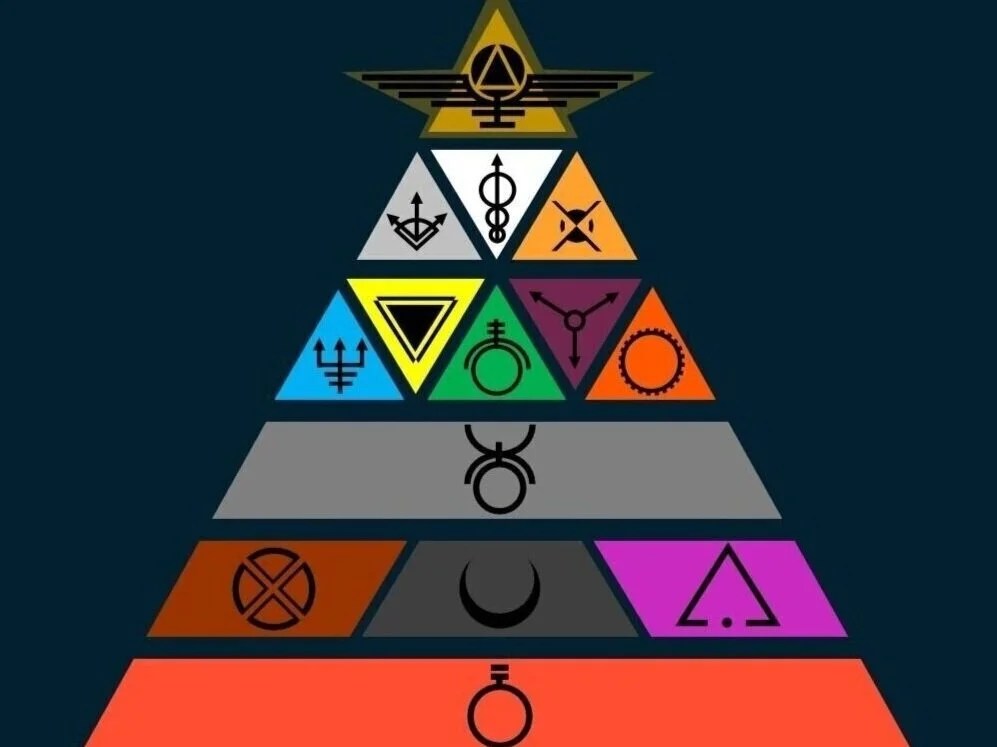
In Red Rising, we meet Darrow, a “Red” miner who believes he’s carving Mars into a habitable world for posterity. Instead, he discovers the horrifying and mind-blowing truth: Mars is already terraformed and thriving, but that part is reserved for the ruling “Gold” class. The Reds, like Darrow, are nothing more than expendable workhorses, toiling endlessly just to subsist. After a devastating personal loss, Darrow undergoes a biological transformation—his body carved into the perfect image of a Gold—so he can infiltrate their society and tear it down from within.
Book 1, at its core, revolves around Darrow’s journey to pull off an unprecedented masterstroke, underpinned by plot armor (ofc), in a brutal proving ground where the young Gold elite, along with other colors, are divided into different houses and thrown into a chaotic faction war whose ultimate aim is to conquer others, to enslave rivals, and to build alliances— all under the close supervision of their masters. Darrow must not only come to terms with the savagery of war but also the treachery of politics, the lust of love, and the qualities of a “true” leader.
And then, just when you think the “game” is over, comes the bidding system. The victors of the Institute are auctioned off to the highest-ranking Gold houses like prized warhorses (you can definitely guess who the most sought-after victor is). This is where the bogus mask of simulation falls away, and Darrow learns his true role: not just to survive a simulated war, but to survive—and master—the real war of politics, where betrayal costs more than blood, and allegiance can be bought or sold.
If Red Rising follows Darrow’s journey of infiltration and survival, Golden Son explodes outward into the broader political battlefield of the Solar System. Darrow, now entangled in the deadly games of Gold nobility, must navigate betrayals, alliances, and full-scale interstellar warfare. His challenge is no longer merely limited to the realms of simulation as he has to manipulate reality to have the last laugh.
Personal opinion:
The first two installments are a great starting point for newcomers to escapist novels, similar to Demon Slayer in anime, as it will not overtax your brain, if not to say it’s easy on the mind despite involving manifold elements ranging from politics and manipulation to romance and equality. The adrenaline rushes facilitated by the choreography of combat scenes are also a great diversion to be honest. Personally, it can be equated with Demon Slayer or Dragon Ball, a foolproof way to introduce you to a new foray.
However, the two books are far from flawless. The pacing is such a nuisance, if not, a drag, especially in the middle of the Institute faction wars. At times, it feels like Pierce Brown is walking us through every single tactical move and it is so monotonous. He loves epic, dramatic sentences, but it can border on over-the-top. Some of the bigger speeches and descriptions get repetitive, and a few sections feel like they’re trying too hard to be “epic” rather than actually moving the story forward. Golden Son isn’t much better. All the political intrigue, betrayals, and shifting alliances can get overwhelming and convoluted in a fashion that is bland and once again, fictitiously monumental, and sometimes it’s hard to tell who’s actually in charge of dialogue or what’s at stake.
Character-wise, several side characters feel so flat or one-note that I couldn’t remember their names or comprehend their significance in the plotline (maybe my memory is the issue here). Even Darrow himself is full of contradictions, fondling another girl while talking about his loyalty to another girl (lol), and this motif is repeated countless times in these two books, not to mention his incomprehensible moves to go against (almost) everyone’s advice and admonishments, leading to unnecessary sacrifices that he later mourns repetitively (such a crybaby).
If this is your first time diving into a story like this, it’s going to feel unique and totally mind-blowing. But if you’ve already read books or watched movies with similar themes, it’s more like an above-average story. So just adjust your expectations a bit, and do not use the hype and fame around the trilogy as a barometer for its quality.

 THE AVID READER
Leave a reply to Book Review #15: Morning Star (Red Rising, #3) by Pierce Brown – THE AVID READER Cancel reply