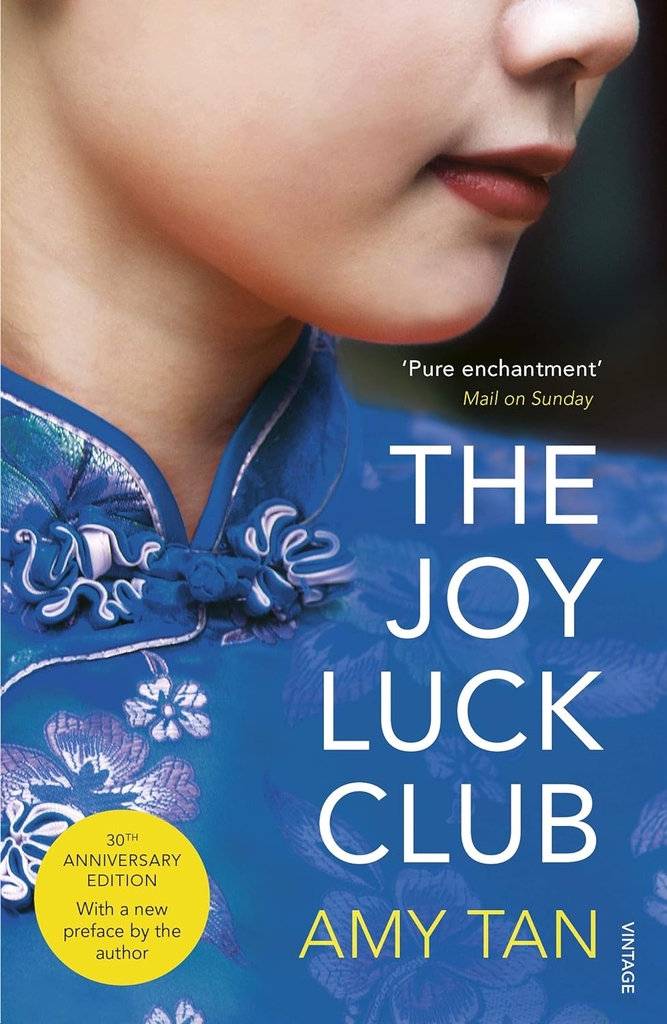
#BookReview: The Joy Luck Club by Amy Tan
A Spoiler-free Overview:
In 1949, four recent Chinese immigrants to San Francisco decided to hold a weekly meeting to play mah jong. More than thirty years later, after one of the women passed away, it was thought that her daughter could take her place. As the three remaining members reveal a deeply buried secret of the mother to the daughter and witness her fumbling in incomprehension, they grow fearful that their own daughters, too, were oblivious to the hopes and dreams they had fought so hard to bring to America.
Personal Opinion:
+) Pro – Originality: Much like the format of mah jong, which is played over four rounds with four hands each, the novel is divided into four parts, each with four chapters. Each part, in turn, begins with a Chinese parable that serves as the overarching theme for the four chapters that follow. The author also makes a deliberate effort to give each part and chapter a meaningful title, such as “The Twenty-Six Malignant Gates” to explore the drifting away of the daughters from their Chinese heritage or “American Translation”, which reflects their Americanized lifestyles. (I’m certainly oversimplifying the themes here, but you get the point!)
+) Pro – Poignant Subject Matter: I very much like to think I hold no grudge against romance novels, but mother-daughter relationships are such a breath of fresh air to read about. The novel adds further layers of complexity with cultural and generation conflict, as the daughters and their immigrant mothers struggle to reconcile their differences.
+) Pro – Authenticity: This novel offers in-depth insights into Chinese culture as readers explore the upbringing of the mothers in China, as well as into the Chinese immigrant experience in America. This is obviously to be expected, given that Tan herself is a first-generation Chinese American, but as always, I highly value the adage of “write what you know.”
-) Con – Fragmented Narratives: Since there are eight POVs (one for each mother and daughter), there is certainly limited room for character development. Sometimes the book feels more like a collection of short stories rather than a cohesive novel, but I believe this serves to demonstrate that this generational conflict is nearly universal among immigrant families.
All in all, The Joy Luck Club is certainly a rewarding read. Though having to backtrack occasionally to check which daughter belongs to which mother and vice versa can be tiring, the novel certainly further illuminates the immigrant experience and mother-daughter bonds for me.
 THE AVID READER
Leave a comment