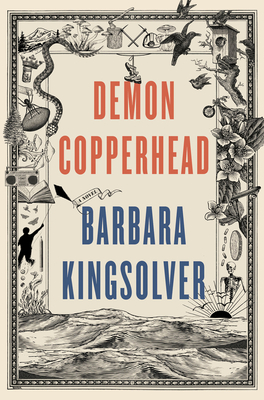
As a person fond of learning about lives that look nothing like mine, I’ll forever gush to others about what Demon Copperhead has taught me about Appalachia – the people, their psyche, their problems, and their beauty. Yes, this is a coming-of-age story, but very likely the best one you will ever read.
#BookReview: Demon Copperhead by Barbara Kingsolver
A Spoiler-free Overview:
The bildungsroman follows the life of Damon Fields, nicknamed Demon Copperhead due to his spunky attitude and red hair. Born to a single mom with drug problems in Lee County, Virginia, Demon is in a constant battle to survive, even more so after his mom married a man with an inclination for domestic violence. Being shunted between foster homes, forced into labor, and succumbing to the addiction crisis that gripped most of those he knows, Demon will have to continue surviving for yet another day in the beautiful but accursed place that he could never imagine leaving behind.
Personal Opinion:
As you may have inferred from the intro, I’m not big on coming-of-age stories, usually because they are irritably cliché (cue: a white American suburb, not that I’m dismissing the problems these suburbanites may have, but this setting is not by any possible stretch inspiring). However, I’m showering Demon Copperhead with praise not only because it’s different but also due to the author’s masterly execution of everything else:
+) Pro – Serious Topic Matters: As Kingsolver stayed in the real Lee County while writing this book, everything, from the themes and scenes down to the smallest details, cannot be more authentic. The book explores the numerous problems Appalachian people face, from poverty to food insecurity to the foster care industry to the opioid crisis, all of which are essentially not their fault. Yet Kingsolver also highlights the beauty of Appalachia: the community who always cares and the unrivaled nature, both of which are often sorely absent in the cities Demon visited that he deemed soulless.
+) Pro – Well-paced: Unlike many coming-of-age stories where most action takes place in the narrator’s head, Demon Copperhead is action-packed in the truest sense. It’s engaging and constantly pulls the reader in. But that is not to say it glosses over the deeper parts, for when Demon needs to process his emotions, the wording matches the seriousness of the occasion. When I finished the novel, I was like, Wow, what a roller coaster it was! But then all the lingering emotions and thoughts will hit me like a truck. That’s a definite sign of a good novel, if you ask me.
+) Pro – Bone-crushingly Beautiful Language: Yes, bone-crushingly, to steal a phrase I saw on Reddit, for I believe very few other words convey the same intensity of beauty. Whatever you do, Google the first pages and give them a good read. You’ll immediately get a whiplash from the acerbic tone of Demon, and understanding his struggles will more than justify this truly incredible artistic choice. The language also evolves subtly as Demon matures, and as I mentioned, the moving parts are given the gravity of wording and all the pausing they warrant. The language use alone made me realize that Barbara Kinsolver is a true gift to human literature.
Now, I’ve really tried my best racking my brain for some cons, or at least just one, but nothing came up. So… take this as a testament to Demon Copperhead’s craftsmanship and profundity! Usually I try not to judge a book prematurely by its awards, but this one more than deserves a Pulitzer, Oprah’s Book Club Pick, and a Women’s Prize for Fiction. Laying it on a bit thick even more than usual, you might say, but as with all other books, just give this one a try and see where it will take you!
(Edited: After some hours of intensive soul-searching (which, again, speaks to the novel’s greatness), I’ve come up with what can be considered be a con for many:
-) Con – A Retelling of a Classic: Demon Copperhead is a retelling of David Copperfield by Charles Dickens. Though not negative in and of itself, many readers who have read David Copperfield have reported that they could foresee the events in Demon Copperhead due to the parallels between the two, which took out some of the enjoyment. Also, the connection to a Victorian novel may scare some readers off – but do not worry, for Kingsolver’s is very readable. Personally, I’m not entirely sold on why Demon Copperhead should be a retelling, for it’s already impactful by itself. True, Kingsolver is the one who won a Pulitzer, but we readers should feel free to have our own opinions!)
 THE AVID READER
Leave a comment