Written by Nguyễn Anh Quân
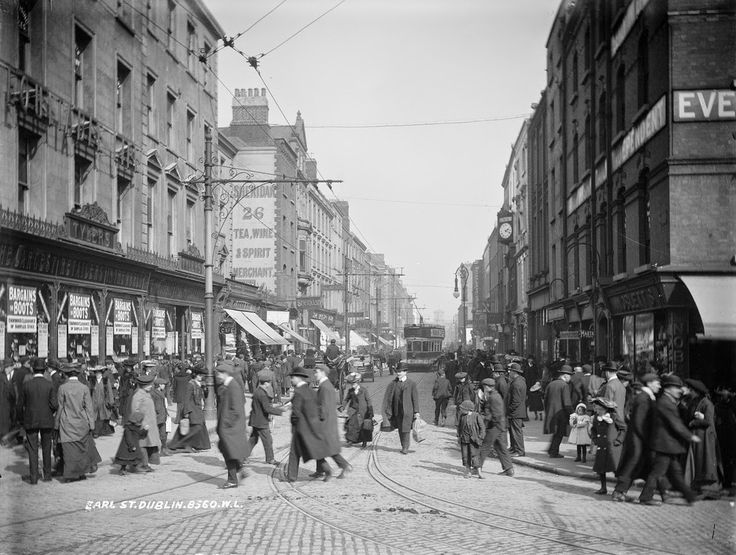
The Dublin of the 19th and 20th centuries. An occupied capital city subjugated via conquest and colonization. A defeated island in a steep recession, its population witnessing the decline of their language and the socio-economic pressure imposed by the rulers from across the Isles, all of which evoked an unmistakable sense of stagnation and paralysis. These descriptions are, perhaps, an oversimplification that is unlikely to paint a comprehensive picture.
Only through immersion in the historical culture through art and literature can we gain a more precise apprehension of life in colonial Dublin. In this regard, no other piece of artwork is as resonant and faithful to contemporary life in the city as Dubliners, authored by an iconic figure who holds an almost mythical, titan-like reputation in modernist English writing: James Joyce.
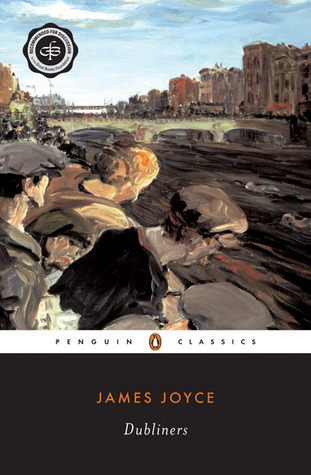
Book Review #9: Dubliners by James Joyce
General structure and a few notable stories:
Although technically a short story collection, the progression of the 15 tales from childhood to adult life and death based on the age of their protagonists gives the book a novel-like structure, a quirk I didn’t notice until the very last chapters. The first three stories (“The Sisters,” “An Encounter,” and “Araby”) offer a sobering and vivid exploration of childhood dangers, delusions, and realizations.
After all the adolescent ambiguities and self-illumination, prepare to be hit with an array of professional and romantic struggles, all of which ultimately serve as critiques of contemporary societal vices, from the superficial and ill-advised pursuit of luxury in “Eveline” to the disillusionment of public life in “Ivy Day in the Committee Room” and “A Mother.”
The collection culminates in “The Dead,” considered by some commentators to be the best English short story ever written. It is a multi-layered exploration of multiple themes, in which the protagonist must confront everything from societal expectations and relationship struggles to patriotism. The story concludes both itself and the entire series by making a lugubrious yet truthful affirmation of the gradual degradation of existence.
Personal opinion:
It must be admitted that it is quite challenging to fully unpack my personal perspective on the work due to the density of what needs to be said. Nonetheless, I will summarize my views from a few angles in an analysis that will hopefully be persuasive enough to convince you to pick the book up and explore everything from your own point of view.
Stylistically speaking, while loaded with culture-specific jargon and references to expressions and locations unfamiliar to non-Irish audiences, James Joyce’s Dubliners marked a departure from the ornate phrasing and the elaborate prose that were conventional in the literary works of his era. It is clear that rather than purely striving for complexity and length, the author had emphasized conciseness and precision in the use of vocabulary and sentence structures while simultaneously ensuring the rich symbolism and nuances.
Having said that, when it comes to actually cracking the book as an average modern reader, I would highly recommend choosing one that features a comprehensive appendix for the frequent references to obscure local landmarks, people, and art. Depending on how well you can handle vague allegories and archaic expressions, it might help to also get a separate annotation book.
In terms of overall reading experience, however, you might be initially repulsed by the monotony and dullness of the unvarnished depictions of ordinary life, a totally relatable response. When I first picked up the book, I actually struggled to flip through the pages because it was essentially the polar opposite of a page-turner. Every story begins with a mundane situation just to end underwhelmingly without anything resembling a climax, something I found even more irritating than cliffhangers. That is not even mentioning the mental workload needed to constantly look up allusions and outdated slang through the appendix and innumerable Google searches.
But at some point you start to realize that perhaps it is the point. The stories do not have to be sentimental or dramatic in order to be appreciated, nor do they require absolute clarity and universal appeal; none of those was the intention of Joyce. Perhaps the monotony in the visceral portrayal of Dublin life is the key factor that turns it into a time capsule that documents the contemporary social paralysis and stagnation, essentially serving as a voice for the city’s historical middle class, something the grandiose fictional writing of the time could hardly have replicated.
Let’s address the elephant in the room: the book is not everyone’s cup of tea. It isn’t meant to be. While you don’t have to be in some circles of experts on Irish culture (as some frustrated readers would mistakenly suggest), a sustainable effort to complete the book requires genuine fascination with its literary and cultural significance and a willingness to delve into not only the historical context and resonant plotlines but also the puzzles and ambiguities intricately injected into the narratives.
Nonetheless, it still makes for a highly rewarding read once you’ve got the hang of everything described, an excellent prerequisite for Joyce’s other highly complex works. My advice is to go for it as long as your enthusiasm is still high. The initial impression will almost certainly test your patience, but I promise that with enough persistence, the true depth of the stories will gradually unravel, making them truly memorable.
 THE AVID READER
Leave a comment