
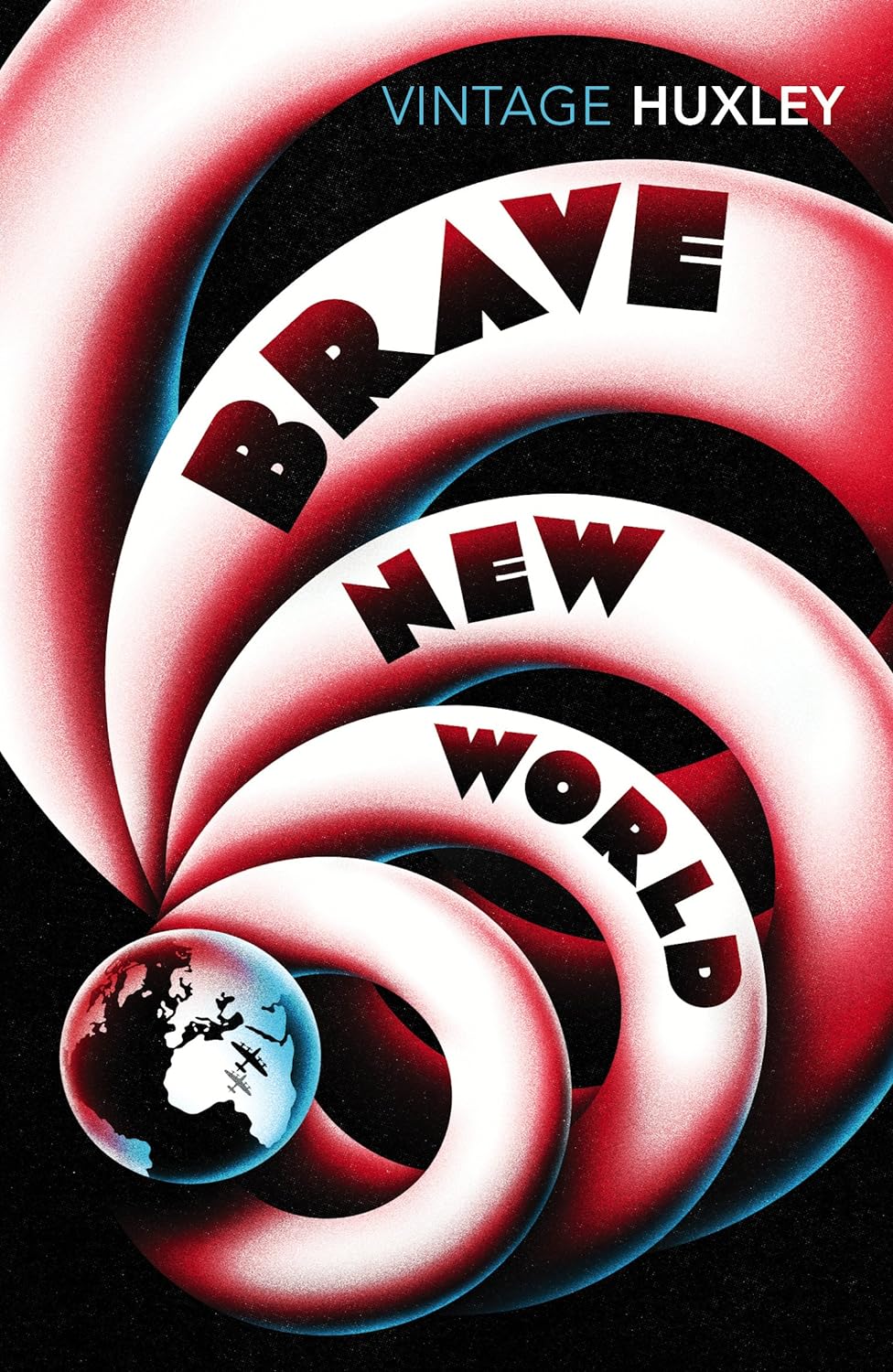
“…But she didn’t hit him. After a little time, he opened his eyes again and saw that she was looking at him. He tried to smile at her. Suddenly she put her arms round him and kissed him again and again.”
Yes, of all the quotable lines in Brave New World, this one held the dearest place in my heart. Not only does it succinctly capture the clash of the two worlds presented, but also the inherent affection in humans that – no matter how frail – cannot be entirely erased by sophisticated preconditioning technology.
True, I’m reinventing the wheel when I’m reviewing Brave New World – one of the pillars of dystopian fiction itself. But I truly relate to its characters, particularly John and Bernard, more than those of any other book, due to the discrimination that I, like these two men, face on a daily basis – look-based or otherwise. More importantly, I love speculative fiction, and love assessing whether a book’s prophecies have aligned with the happenings since its publication or not. For this reason, it should be abundantly clear to all of us that Brave New World is a more urgent read than ever due to its chilling prescience.
Reading Blog #4: Brave New World by Aldous Huxley and the Two Futures (or More) for Mankind
A Plot Overview:
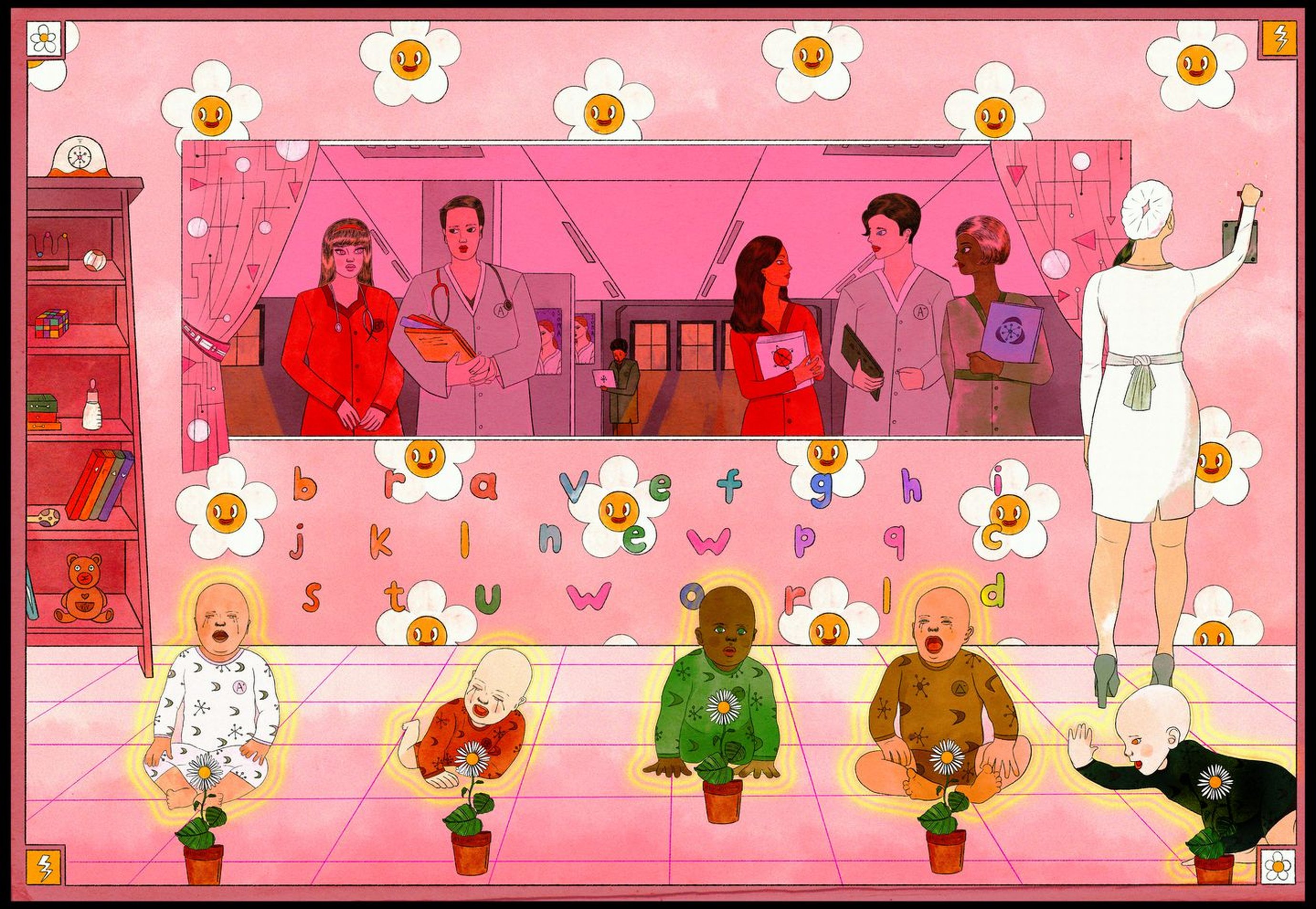
Technocratic forces began to clash with the old world order, leading to “The Nine Years’ War” and the subsequent Economic Collapse. Standing before World Control or total annihilation, the world opted for the former. Potent technology like hypnopedia and predestination was introduced, resulting in the so-called Brave New World.
Bernard Marx is a psychologist at the London Hatchery and Conditioning Center. Due to some mishap when he was “hatched,” he looked miserably wispy and was thus belittled by others. This bred resentment in Bernard, and he felt discontent with life, even including the omnipresent drug soma and sexual promiscuity. One day, he asked a colleague, Lenina, out to visit the Reservation – the last stronghold of the old world. Here, they met John, the Savage, and reintroduced John to the new world. Thus began the unspeakably immense disorientation that John would feel.
Personal Opinion:
Yes, I know: right at the start, the protracted tour through the fertilizing process is a real drag. The mile-long scientific terms put so many readers off, if Goodreads reviews are anything to go by. In fact, I’ve attempted to read Brave New World three times before finally breaking through. (Pardon my short attention span.) But this time around, as I fired every neuron within my spatially challenged skull, I came to genuinely… appreciate the details. This is probably because after penning my own novel, I know how long it must have taken Huxley to do research and conflate it with his own ideas before finally crafting such brilliant scientific concepts. The more I read the scene, the more I find it charming, perhaps also partly due to the slightly sardonic, amused narrative voice as well. Nothing makes my day better than a witty narrative voice.
Once you have plowed through the first dense chapter, the rest should be a breeze. Phew! But now, let’s delve briefly into the characters. Both Bernard Marx and his male friend, Helmholtz Watson, feel indifferent to or disaffected with life as it is and yearn for something else, something grander that the current, debased world cannot offer. Yet for Bernard, the root cause is his frowned-upon appearance, while for Helmholtz, the monotony of others’ admiration for him and the general depravity. Meanwhile, John, being the only white man in the Reservation, is continually persecuted and left out. Without elaborating on further details (for this is a spoiler-free review), I truly identify with all of them. Having keloids, a skin blemish that few have, mark me out from everyone else, just like Bernard and John. I used to feel extremely alienated – whether others did discriminate against me or not. And like all of them, I am by and large appalled by the hyperconsumption and depraved excess generated by social media and smart corporate marketing. Amidst an increasingly homogenized world, many individuals like us may feel isolated and impotent, perpetually craving for something beyond ourselves.
On that, I’d love to segue into the focal point of this blog: the two worlds presented in the book. As a speculative book, Huxley pitched them as the possible futures for mankind. They are as follows:
- The new world order: where stability is now guaranteed. Everyone is content with their station, job, and life. No passion is allowed, with child-bearing and long-term relationships now non-existent and actively discouraged. Any disaffection is promptly and easily treated by a few doses of soma – a drug (largely) without side-effects – as well as constant copulation and cheap entertainment such as the feelies.
- The old world order: represented by the Reservation. People still practise marriage and monogamy – hence true love and affection. Similarly, religion and culture still exist. However, the absence of technology means that diseases, such as syphilis and goiter, abound. Physical pain and emotional suffering remain.
In the book, the Savage was faced with these two choices. But this begs a critical question: Do mankind really have two choices, just like John?
And here came the dilemma. “What?” you say. “Pfft. A masterpiece like Brave New World cannot have a flaw!” But it does! Huxley is only human after all (believe it or not). What about the world that we’re living in now? It hasn’t veered to either extreme, at least not completely. Consumption and, in some ways, dissipation are on the rise, yes, but we still have real affection and physical and emotional pain. Even Huxley, 15 years after the publication of Brave New World, had to admit the biggest weakness of the book is that “the Savage is offered only two alternatives,” being the two options listed above. Though the possibility of humanity realizing the first scenario still remains a very real possibility, this unfortunate lack of nuance is this masterpiece’s greatest weak point.
So what lies in store for humanity? Or rather, how should we proceed in the future? It is painfully clear that humanity should not side with either of the above options. How about a world that uses technology not to fuel human shallowness, but one that uses it to promote our inherent goodness? Like the great advances in medicine that allow us not to fret about our foreshortened life, but spend life in a more fulfilling way with our meaningful pursuits and around friends and family? As Aldous Huxley said: You pay your money and you take your choice.
 THE AVID READER
Leave a comment