A wholly unique science fantasy world that is not Medieval Europe where…
Every society tries its damnedest to prepare for the recurring planet-level apocalyptic disaster.
People draw power from geology, a.k.a. rock and the earth, as well as floating crystals called the obelisks, instead of healing, fire, bows, or any other such generic power.
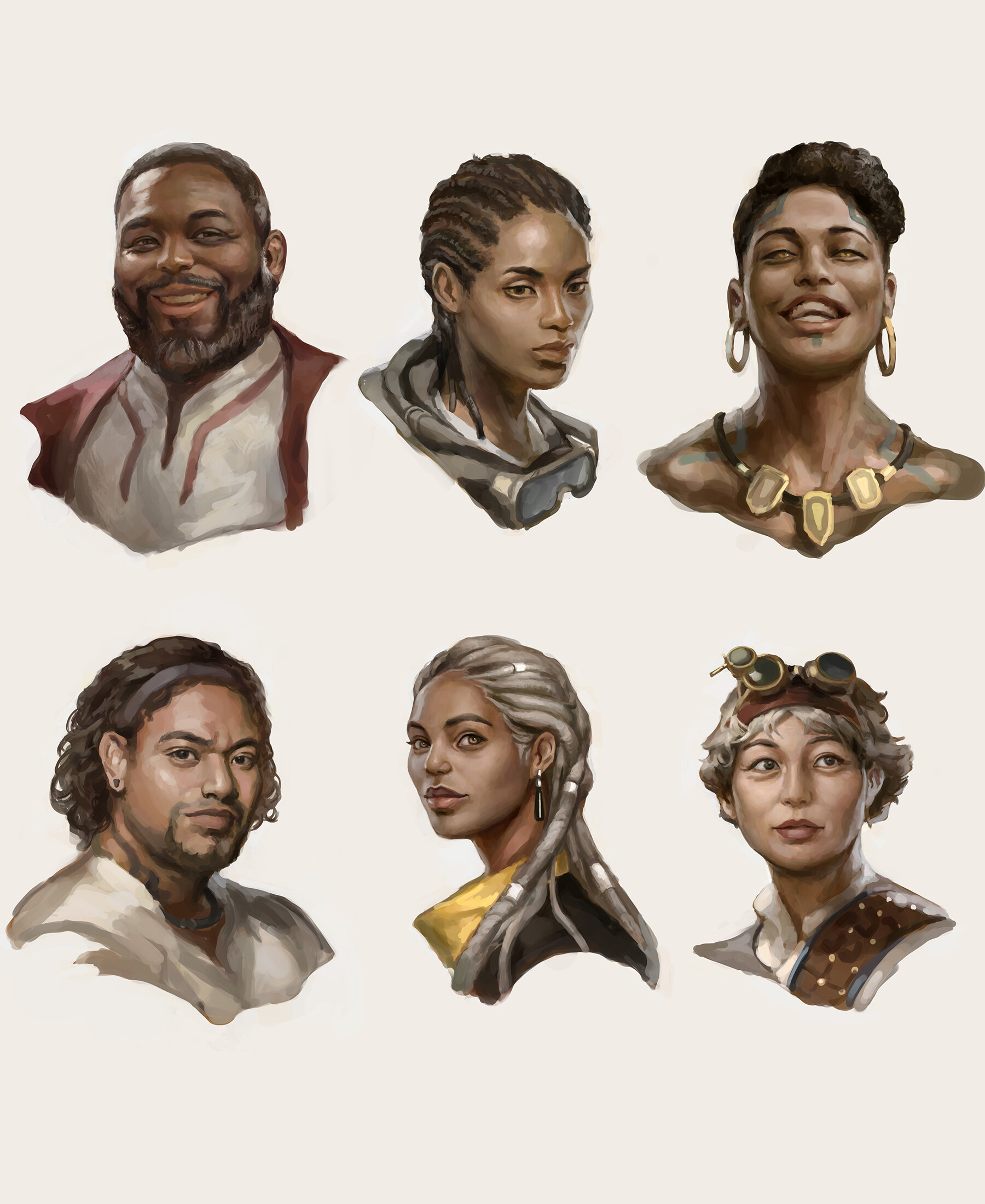
The main cast is an unapologetically black and brown majority.
Relationships are not straightforward, trendy patterns like “enemies to lovers,” but filled with bitterness, oppression, and the occasional, healthy dose of polygamy.
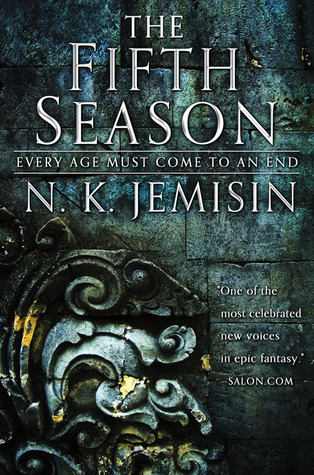
Earthfire, I’m really launching into an info-dump. But if The Broken Earth trilogy, starting with The Fifth Season as book 1, is not the most unique series ever, I honestly don’t know what is!
Book Blog #2: THE FIFTH SEASON and Diversity in Literature

As usual, a spoiler-free synopsis goes first:
Throughout the first book, we follow the journeys of three characters:
- Essun, a middle-aged orogene, e.g. a person capable of controlling the Earth, sets out on a journey after coming home to find her son dead at the hand of his own father. She is after her husband (to off him, of course) and her daughter, Nassun, who has been kidnapped by her father.
- Damaya, a child oregene, who has been locked up by her community due to her orogenic power and is being taken to the Fulcrum, an academia for her people, to become a trained orogene.
- Syenite, a 20-something oregene, sent out on a mission at a coaster community, as well as breed with a high-level orogene named Alabaster to ensure a powerful lineage for the Fulcrum.
Personal opinion:
As evidenced by the title of today’s blog, I am absolutely enamored of the Fifth Season thanks to its breathtaking diversity. This is a story about three women, written by a woman (my queen N.K. Jemisin!!!), with a wide-ranging cast that seamlessly embraces gay men, a trans woman, and a healthy polygamous relationship (emphasis on healthy). No, this is not tokenism. Everything represented here is so well-woven to create a beautiful science fantasy world that completely normalizes these differences (which obviously don’t include orogeny, haha).
Regarding the plot and themes of the book though, the Fifth Season is hands-down perfect. Yes, I use perfect in the absolute sense – after all, the series didn’t win the Hugo Award three years running for nothing. The first book is centered around grief, oppression, and love, and is beautifully written in either wittily sardonic or hauntingly beautiful prose, which is a difficult blend that Jemisin pulled off successfully. Just look up some quotes from the book and you’ll know I’m not bluffing.
The social issues present in the book take me aback by how much they paralleled our real world: how people decided to fear and discriminate against rather than the orogenes due to their earth-shattering power (no pun intended). There is even a slur for the oregenes called “rogga” and the main characters are capable of code-switching, reflecting real-world coping mechanisms against racism. This is even more moving when I discovered that Jemisin is a black woman and knew about her struggles to be accepted in mainstream literature.
The character work is … simply top-notch. With three main characters belonging to three different generations, the narratives don’t blur, but remain crisply distinct and include all the thoughts and wonders common to that age group. For example, our sweetheart Damaya is awed by “hot water… tons of it just falling from holes in the ceiling like the most perfect rain ever.” How can anyone not squeal when they read of such a childlike wonder? Meanwhile, Syenite swears every three paragraphs or so, what with her relationship with Alabaster, and Essun largely keeps calm and collected. I won’t say much, but distinct and seemingly unrelated as they are, the three POVs will converge in a book in the most beautiful and mind-blowing way toward the end of book 1. (No, please don’t google anything about any of these three characters, the blasted Google AI search might spoil stuff for you)
And back to the uniqueness of the series. Gosh, how can I not mention this? The use of the second perspective! Essun’s section is masterfully written, and once I read the author’s explanation of her unusual choice, I cannot imagine Essun taking on any other perspective: the use of “you” helps Essun distance herself from the trauma of her son’s murder in the beginning and continue on a grief-wrecked journey. And the novel uses the present tense through and through to give the events an immediate, tense feeling. On a side note, to those who snub a book because of its perspective/tense before even reading the first page, just a word: why? Yes, why? Literature has many tenses and POVs for us to use, not to neglect. Yes, there are conventions, and that books of a genre have a certain inclination, but that’s no reason to cancel the outliers. In fact, as ChatGPT is making deeper and more outrageous inroads into writing by churning out generic and soulless prose, it is time for writers to stand up, break writing rules, and let creativity take the helm.
The Fifth Season should be celebrated, not shunned, for its groundbreaking originality.
 THE AVID READER
Leave a comment