

A hero turned tyrant due to the corruptible nature of power.
A rising, charismatic underdog leading a rebellion that, no matter how ridiculous the odds against them may seem, will probably win one way or another.
“Wait a minute…” you say. “These tropes are as old as the hills! You can’t possibly want to persuade us to read Mistborn: The Final Empire this way, right?
“Right?”
Well… What if I tell you these tropes are completely turned on its head eventually? What if I tell you one of the two protagonists will—
Nope, nope, I shall stop here. The first Mistborn installment is a solid book that should be enjoyed spoiler-free. My job here is to introduce this sublime book to you and give an overview of how the subversion of common tropes makes it one of the landmark works of modern fantasy.
Welcome to Book Blog #1: MISTBORN: THE FINAL EMPIRE and THE SUBVERSION OF TROPES
First and foremost is … a spoiler-free synopsis!
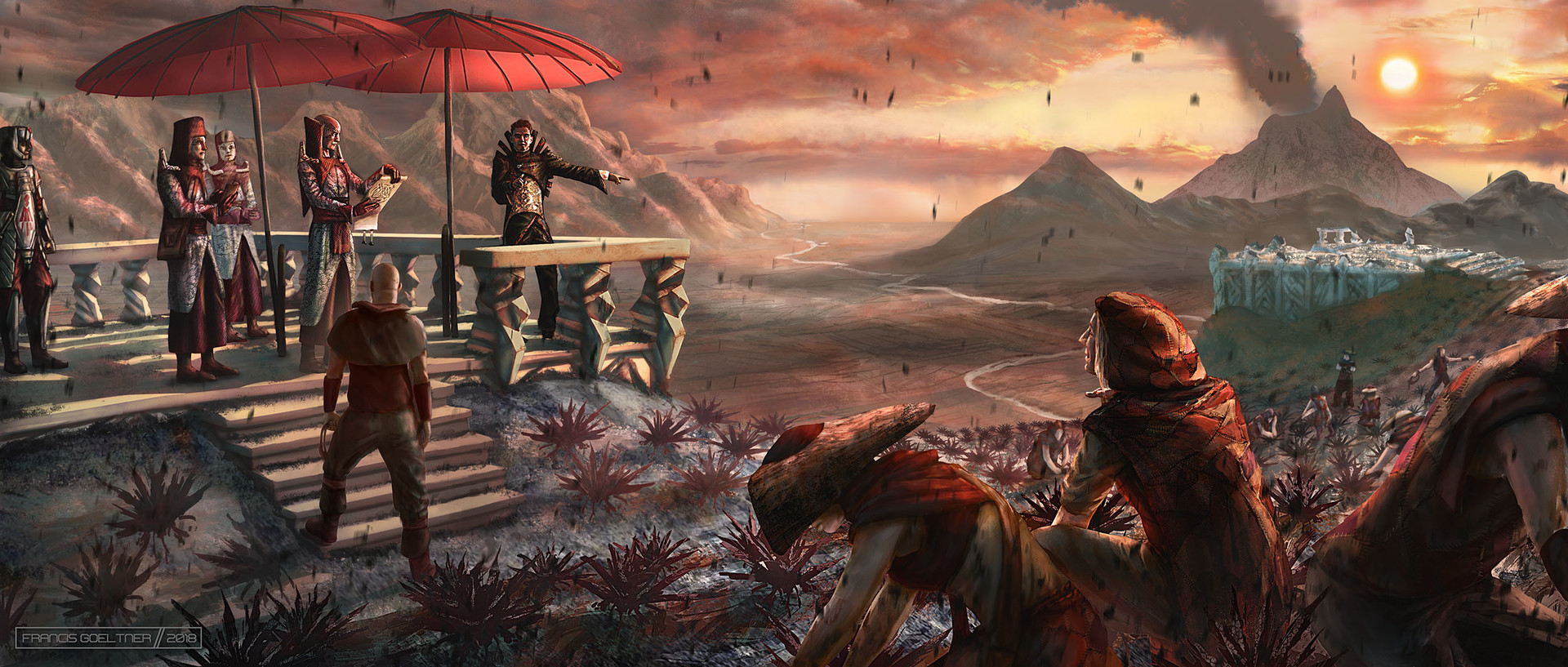
The god of the Final Empire, the Lord Ruler, has lorded over the land and oppressed the skaa – the low-class commoners – for a thousand years. Noblemen, though still under the thumb of the Lord Ruler, received from him the power of Allomancy to manipulate metals, and some half-breeds inherit this power. Kelsier, a half-breed and a charismatic leader of an infamous thieving crew, uses his power and crew, as well as recruits new power-wielders and skaa alike, to overthrow the Final Empire by crippling its financial system. Vin, a distrustful street urchin and also a half-breed, is recruited and becomes a useful member of the rebellion. Thus is born an uphill struggle against God himself and the empire that he had carefully constructed in the last millenium.
Personal opinion:
Many people absolutely adore the Mistborn series, the first installment included, for its well-thought-out magic system called Allomancy (among others, of course). I can’t agree more, for it’s one of the most ingenious “hard magic systems” I’ve ever read – systems that can’t be changed malleably but used strategically for an edge only. I won’t spoil too much, for it is a joy in and of itself to gradually piece together the different powers of various metals in this system. To give a very brief example: By burning iron, one can pull toward themselves an object that weighs less than them. However, doing so with an object that weighs more – say, a crane – will make the person be pulled toward the object instead. Manipulating this pull-and-be-pulled system well allows a person to fly, dart, dodge, or do any physical action imaginable, which means we as readers can enjoy mind-blowing martial battles with immaculate fight choreography that keeps us perpetually on edge.
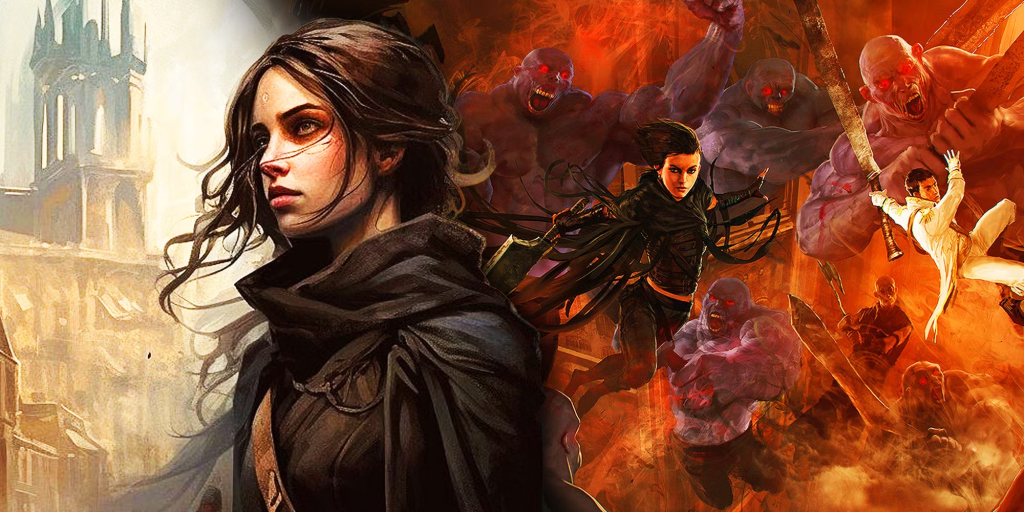
Brandon Sanderson’s character work is similarly incredible. The arc of Vin is ironically slow but most visible, and it is pulled off in such a believable fashion that I can’t help but cheer on for her. Kelsier also improved over time, albeit significantly more subtly, but again, the genius of Sanderson is that he makes readers fervently root for the protagonists. Side characters may seem flat and one-dimensional in book 1. However, as I have finished book 2 already, I can assure you their depth will be explored later in the series.
But that is not to say Mistborn is a well-rounded masterpiece. True to popular opinion, the relationship work is rather questionable at times, especially the relationship between Vin and her love interest. (It can be that I’m being bigoted and envious of their love, who knows? But I just genuinely don’t buy it). Moreover, the middle part of the story does drag. I’m under the impression that Sanderson wants to include some political intrigue (if I can even call it that) to prep the readers for book 2, but the stakes of the “politicking” don’t seem dangerous or even real to me, but more like poor-quality high-school gossip and plot-necessary space for Vin’s romantic relationship. Most importantly, though, Sanderson’s prose, at least in this series, is mediocre at best. It is the type of uninspiring prose that serves no purpose except getting straight to the marrow of what happened. This, coupled with the middle sections that drag, can be a huge turn-off for the impatient.
Nonetheless, these weak points are more than made up for by, as written in today’s blog’s title – the reversal of tropes. Obviously, as a spoiler-free review, I can’t, no matter how much this pains me, specify how exactly the tropes are turned upside down. Of course, The Final Empire has a profusion of tropes, and just a couple of them are upended (that is why tropes are classic, after all). But those that actually subvert expectations are major ones, ones we thought so lamely predictable that get a 180 in the end, when all the pieces finally fall into place. This is a common thread between Sanderson’s works: his beginnings and middle parts might seem comparatively banal, but all the setting and clues laid out will pay off in the end when they perfectly align and absolutely blow the reader’s mind.
For me, this subversion of expectations is what makes Mistborn: The Final Empire so special, and understandably lead many others to hail the series as a major landmark in modern fantasy.
 THE AVID READER
Leave a comment